ARtilleurs: A Beam of Light Replaces Controllers
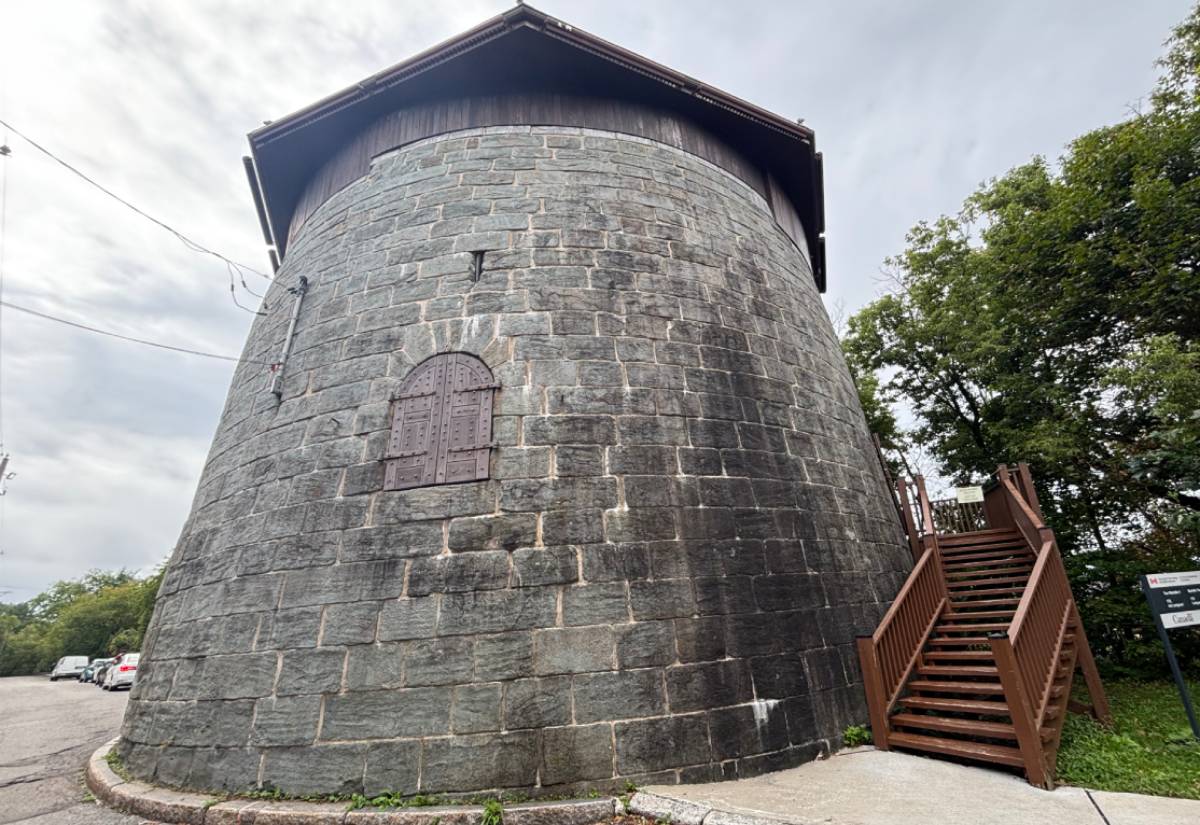
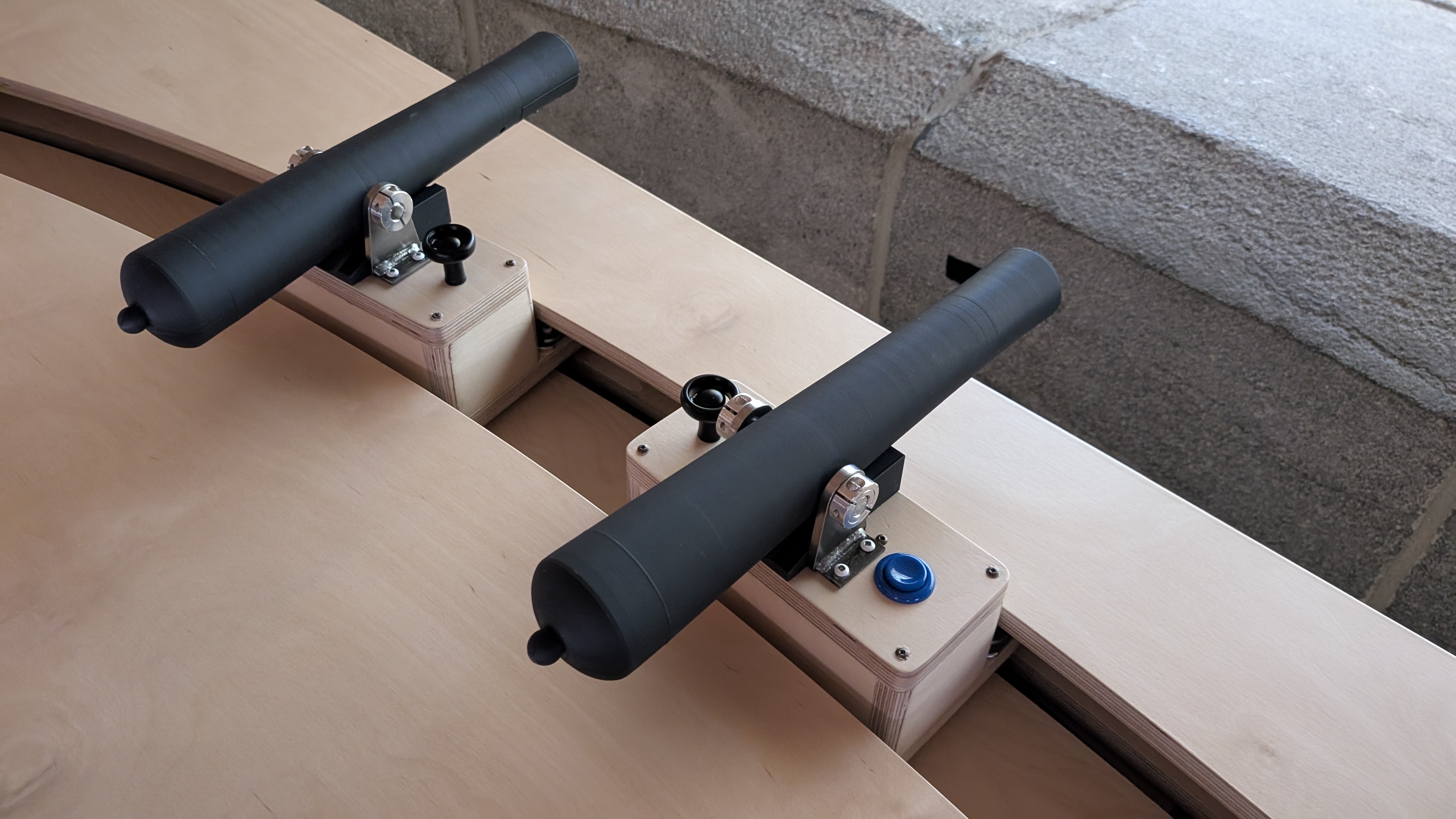
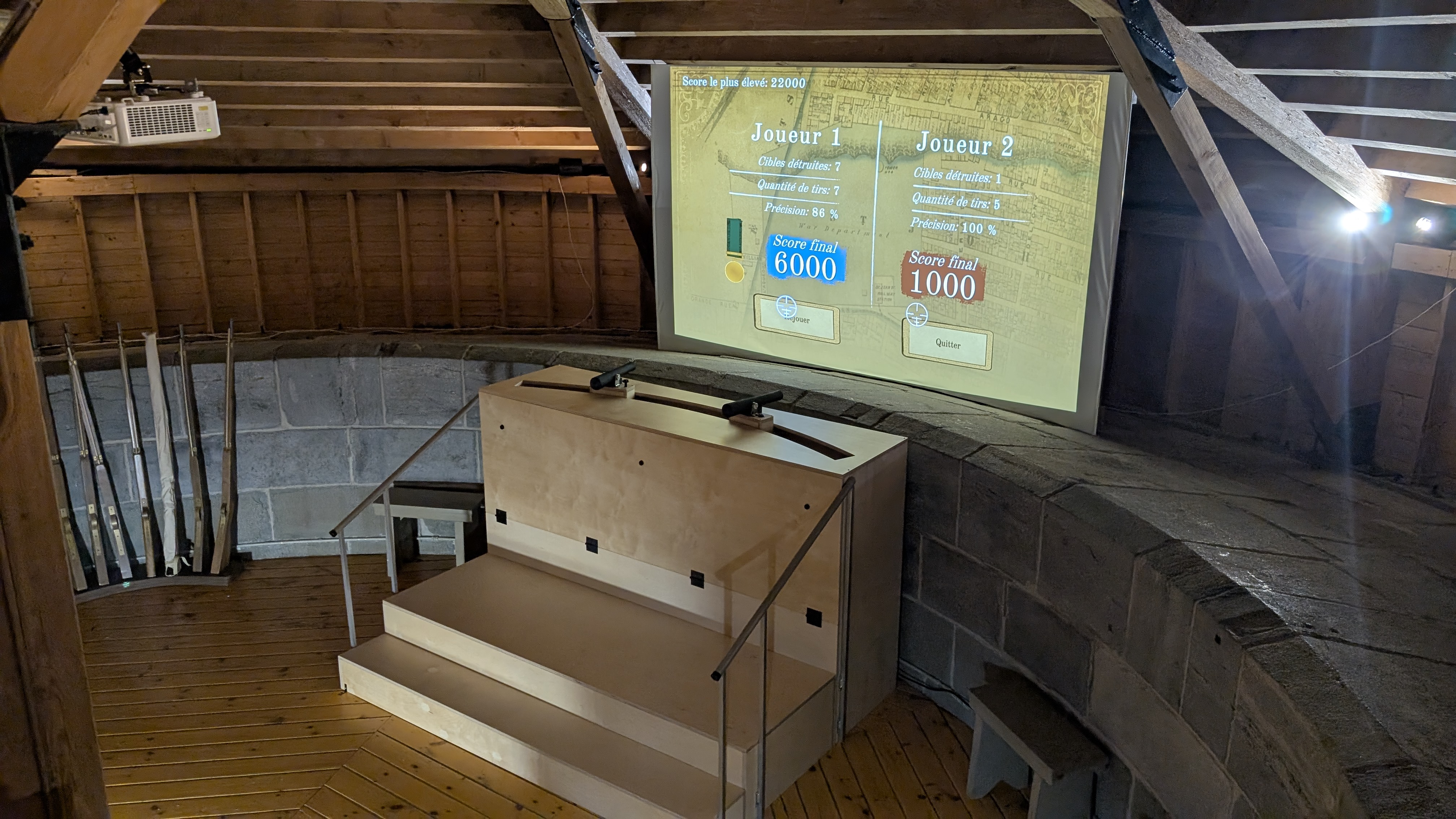
Since mid-July, inside Martello Tower 4, two rail-mounted cannons have been rotating and firing virtual cannonballs at targets scattered across a reconstruction of the Plains of Abraham as they appeared in the early nineteenth century. The experience is called ARtilleurs.
Two articles have already covered the experience, one from the Journal de Québec (article #1) and another from the local news platform MonQuartier (article #2). Both focused on the visitor experience and the history of the towers. In this article, we want to explain the detection technology because it simply did not exist before we built it.
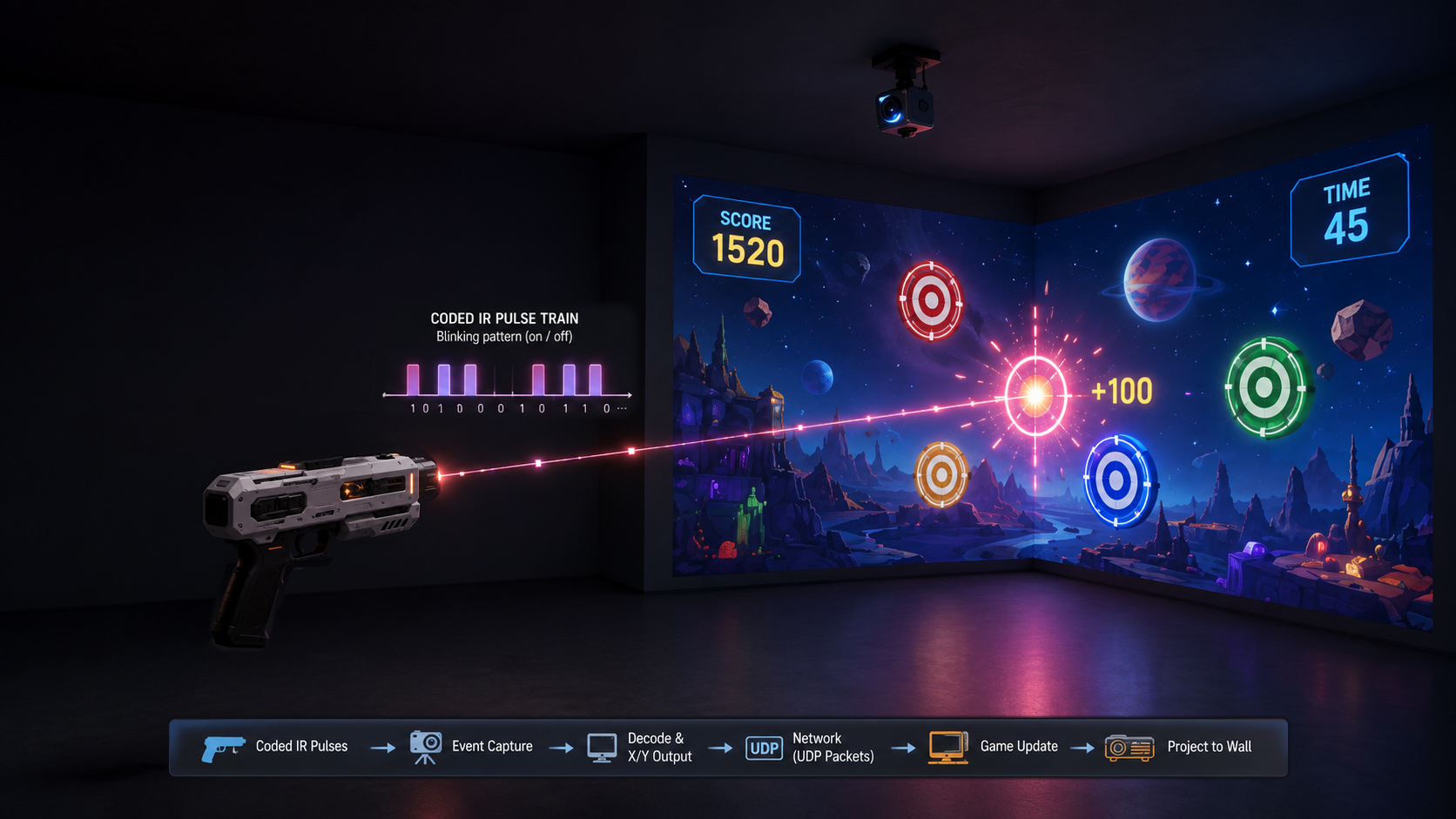
Detecting an impact on a wall is nothing new. What is new is the architecture we imposed on ourselves: no electronic connection between the "weapons" and the computer, no Wi-Fi, no Bluetooth, no synchronization, and no communication link to maintain. Every bit of information travels through light.
We presented our hypothesis to external specialists, and their verdict was uncertain. It was promising enough to justify investing in research and development, but not convincing enough to guarantee success. That is exactly where R&D becomes a real gamble. You have to buy equipment, invest development time, and accept that the hypothesis may ultimately fail.
The MEIE collaborative program (PAPDE) helped secure part of our R&D investment.
Our concept is similar to a TV remote control. In a remote, an infrared LED sends an encoded message, a sequence of pulses similar to Morse code, and a small receiver decodes it. The light is diffuse, there is only one specialized receiver, and response time is of little importance.
ARtilleurs almost completely reverses that geometry. Our laser pointers also emit an encoded infrared signal, but instead of flooding the room with light, the beam projects a tiny point onto the projection surface. A high-speed camera captures the infrared image on that surface, and an algorithm analyzes the image to determine both where the point is and what message it carries. For example: Cannon No. 1 has just fired here. Cannon No. 2 is aiming there.
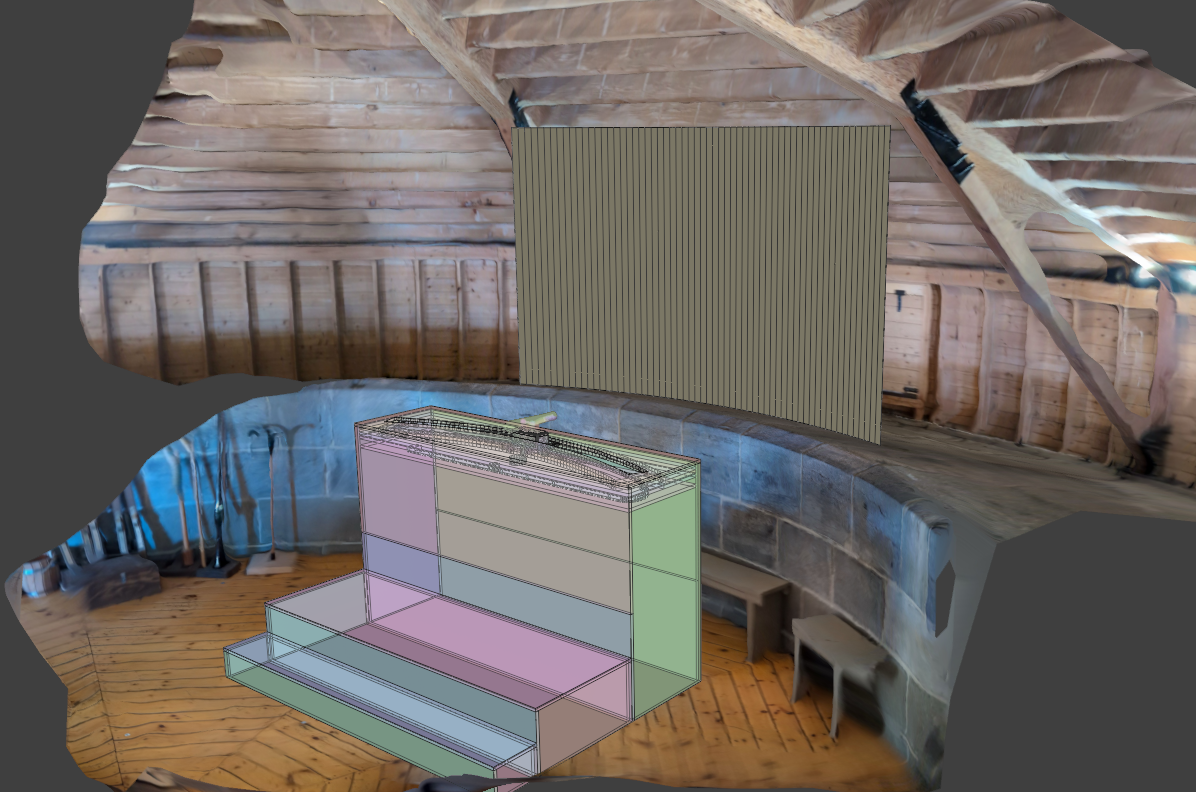
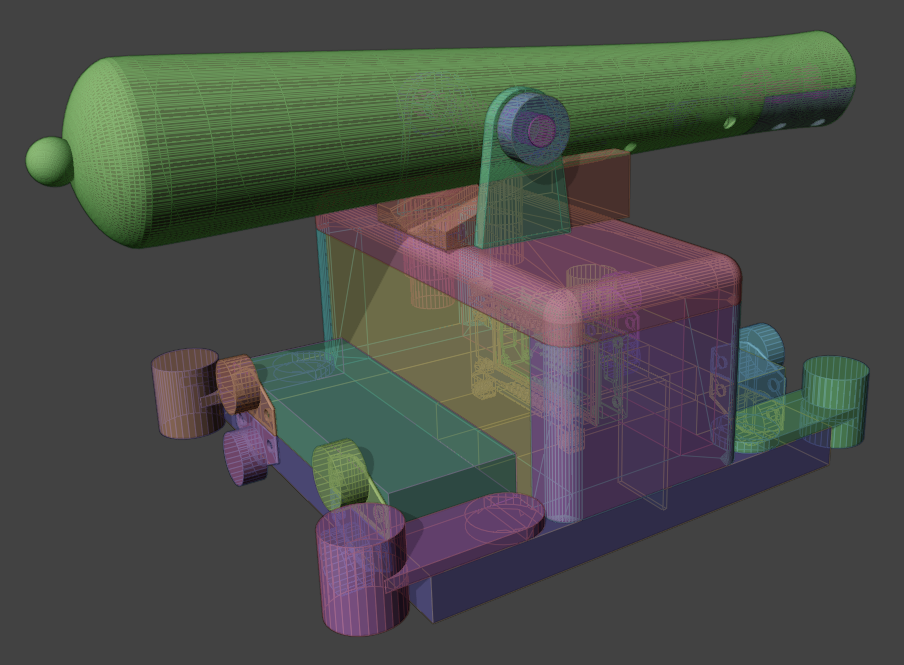
For an independent studio that enjoys innovating in interactive entertainment, that is the real deliverable, not just an interactive challenge inside a historic tower, but a reusable technology building block. The entire system was designed, prototyped, validated, and installed in less than four months.
#INDIE BIG
Thanks to:
We would like to thank the Plains of Abraham Museum, which opened Martello Tower 4 to us and brought historical rigor to the project, Awastoki, the Wendat studio from Wendake, for the 3D reconstruction of the Plains, Conception Alain Gagné, which manufactured the physical module exactly according to our plans, and Elisabeth-Anne Bütikofer from Québec EPIX, who connected us with and supported us in our approach to the Ministry of Economy, Innovation and Energy (MEIE). We also thank the PAPDE program, whose remarkably fast support made this project possible.
A special thank you goes to Jean-François Lalonde, professor at Université Laval and specialist in computer vision, and Nicolas Lapointe of Point.Laz, who agreed to challenge our hypothesis before the first prototype even existed. Their critical perspective allowed us to invest with a clear understanding of both the opportunities and the risks.